
Stream Work
Tributary work is the single most important contribution we can make to the health of the Wolf River and its watershed. The life-blood of the Wolf is in its tributaries. by working them I mean clearing obstruction to flow, which increases the velocity of the water. Because of what this does to a stream, it is important to start at the bottom or lower end of the stream and work up. There are three key results: 1) The water level drops. The volume of the water stays the same, but with increased flow there is a corresponding decrease in the area of the stream. Man-made, or forced channelising is very expensive, and often fails. Once obstructions are removed, the increased velocity chanelises the stream on its own. Let the water do the work! 2) The temperature of the water stays closer to its source temperature, meaning cooler in summer and warmer in winter. 3) The stream is open for fish migration. This only concerns a complete obstruction, like a beaver dam. The most important migration is spawning, but trout also migrate through a stream to relieve temperature stress. Simply clearing obstructions to flow costs little, but the benefits are extreme! Its a win win win for the Mighty Wolf and its watershed!
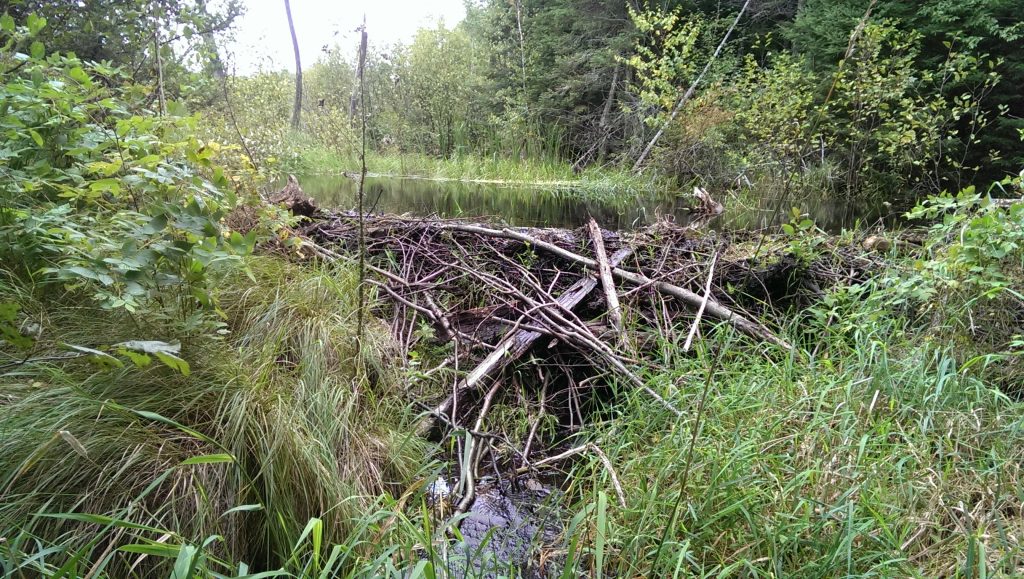
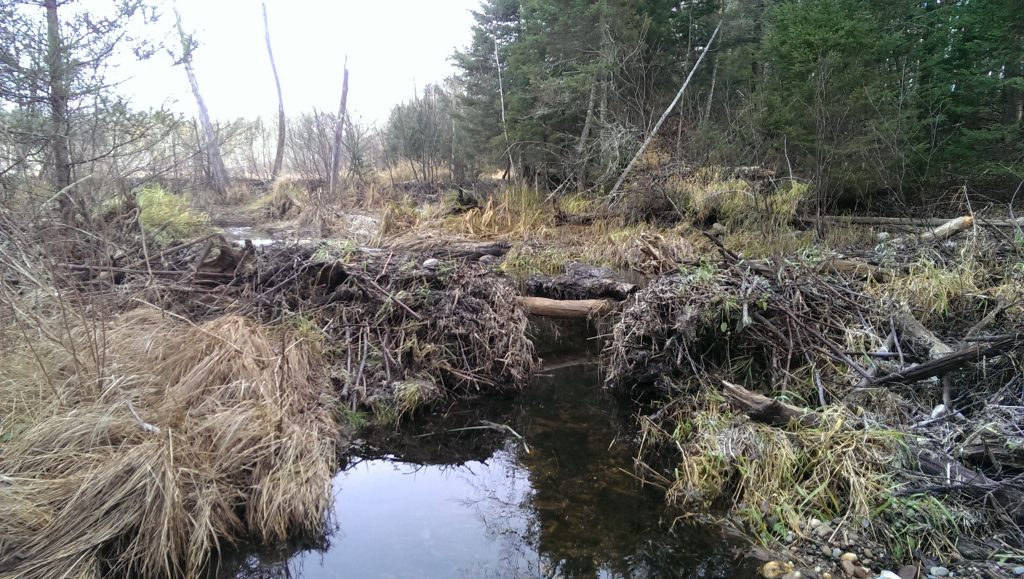
Carbonari Creek was occupied by a pair of beaver in 2015. I contacted the WDNR, and they contacted their trapper, John Carbonari, who removed the beaver and the dams. These pictures are of the lower dam before and after beaver removal.
On June 29th, 2023 John and I removed a beaver dam on Hollister Creek. In the following weeks multiple check dams were removed as we worked up stream, reaching the lower fork by September. Hollister Creek is a known trout producer for the Wolf River, but was blocked close to the confluence. I planted a thermistor near the confluence of Hollister Creek and the Wolf 325 feet below the dam on June 23rd, 2023. The following chart numbers the creek temperature before and after dam removal compared to the air temperature.
Dates Hollister Air Average Temperature Hollister Creek Average Temperature Difference
6-24-23 to 6-28-23 66.79 56.68 -10.11
6-30-23 to 7-4-23 71.42 56.68 -14.74
The creek temperatures are not a typo. The water averaged exactly 56.68 degrees in the five days before and after the dam removal, but the average air temperature rose 4.63 degrees!